Quick Summary: Choosing the right living room floor tiles depends on room size, durability, slip resistance, lighting, and maintenance needs. Vitrified and porcelain tiles offer excellent durability for everyday family use. Glossy finishes can brighten the room, while matte tiles provide better slip resistance and require less visible maintenance.
Selecting living room floor tiles helps you create a clean and durable gathering space without constant maintenance stress. Proper floor material choices prevent moisture absorption and simplify daily sweeping routines across busy households. Understanding technical specifications, correct sizing, and material grades ensures your investment lasts for years.
Choosing the right living room floor tiles involves looking beyond just visual design. You must evaluate how the space is used daily.
Regular Family Use: Living rooms experience frequent walking, shifting of chairs, and furniture weight rather than heavy industrial traffic.
Lighting Conditions: Rooms with minimal natural sunlight benefit from reflective surfaces, while bright rooms handle low-glare options well.
Subfloor Quality: A flat, stable concrete base is necessary before installing large-format living room floor tiles to prevent cracking.
Different material compositions determine how long a floor handles surface wear and liquid exposure. Always check the manufacturer's declared water-absorption specifications rather than assuming one value for every tile in a category.
Selecting the correct format prevents awkward tile cuts and makes standard living areas look visually balanced.
600×600 mm: An easy-to-install choice for small or standard rooms, helping maintain clean grid lines.
600×1200 mm: Creates fewer grout lines and a contemporary appearance in medium-to-large halls.
800×1600 mm: Large-format slabs ideal for expansive luxury villas requiring a seamless, monolithic floor flow.
Surface textures dictate how light reflects across an indoor space and how much grip is available underfoot.
High Gloss: Reflects window sunlight to brighten dark rooms effectively, though it requires regular dusting.
Matte Texture: Reduces glare and hides fine dust particles between cleanings. If slip resistance is a priority, check the manufacturer's tested slip-resistance rating rather than choosing solely by the word matte.
Wood Grain: Delivers natural warmth and classic aesthetics without the rotting risks of genuine timber boards.
For more information on choosing the right finish for your living room, you can also explore the Glossy vs. Matte Living Room Floor Tiles blog for useful insights.
Floor tile colours set the visual tone of your entire home interior.
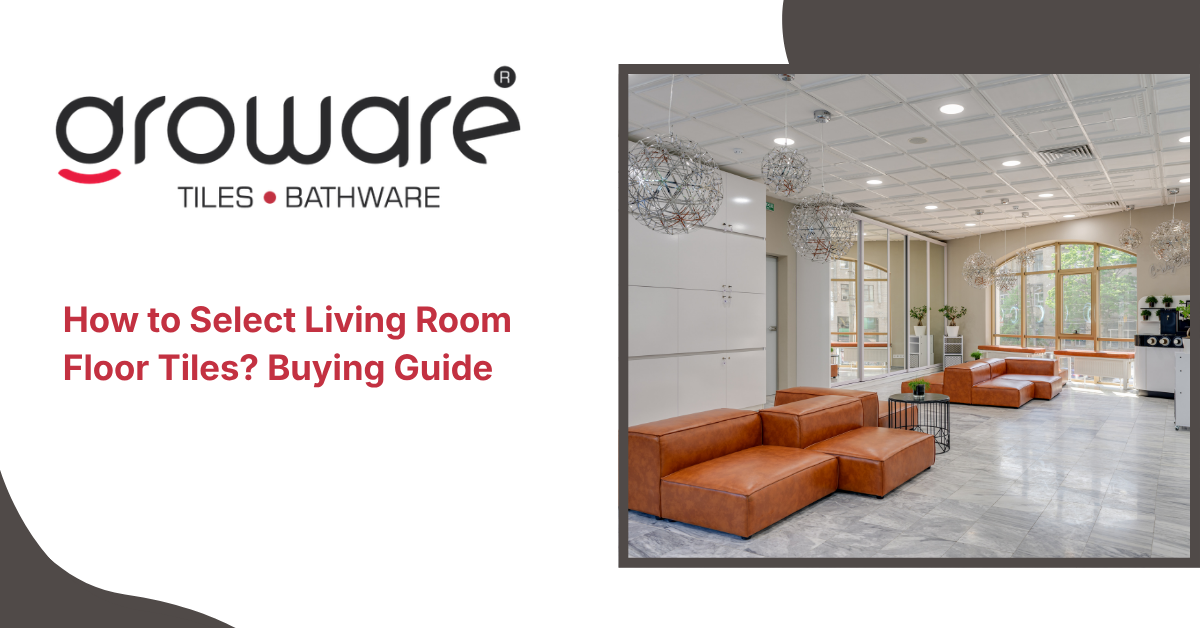
Light Shades (Beige, Light Grey, Ivory): Reflect light and make compact rooms look much larger and more open.
Dark Shades (Charcoal, Deep Brown, Slate): Add a bold, modern feel to large, well-lit spaces but show dust more easily.
Neutral Tones: Cream and soft earth tones match easily with diverse wall paints and wooden furniture styles.
Check living room floor tiles slip resistance and technical specifications. Technical ratings protect your family from accidental slips and ensure the material withstands household impact.
Look for verified slip-resistance coefficients tested by the manufacturer.
Check PEI abrasion ratings to ensure the glazed surface resists scratching from footwear and furniture sliding.
Verify thickness consistency for your living room floor tiles, especially when mixing different batch numbers during installation.
Ordering the exact floor area will leave you short due to corner cuts and breakages. Always buy extra material.
$$\text{Total Tiles Needed} = (\text{Room Area in Sq Ft} \times 1.10)$$
Standard Wastage Rule: Adding a 10 percent safety margin covers cutting waste during installation.
Complex Layouts: If your floor layout has diagonal laying patterns or many pillars, consider ordering 12 percent extra.
Pricing varies widely based on several manufacturing and logistical variables.
Size and Thickness: Larger slabs and thicker profiles cost more due to specialized pressing technology.
Finish Type: Nano-polished glossy surfaces and carved textures involve extra processing steps.
Brand and Location: Transport fees vary based on shipping distance from manufacturing hubs like Morbi, Gujarat. Always request a detailed per-box quotation from local dealers.
Proper installation protects your flooring investment against premature cracking or uneven lippage.
Rectified Edges: Choose laser-cut rectified units if you prefer ultra-thin grout lines for a seamless look.
Epoxy Grout: Use stain-resistant epoxy grout instead of traditional cement to prevent dark dirt buildup between joints.
Lippage Control: Ensure professional installers use leveling spacers so adjacent edges sit completely flush.
Keep your living room floor tiles looking brand new with simple upkeep habits.
Regular Sweeping: Remove loose dust and grit daily with a soft-bristled broom or microfiber mop.
pH-Neutral Cleaners: Wash the surface using mild, pH-neutral floor cleaners to protect the glaze from chemical damage.
Furniture Pads: Attach felt protective pads under heavy sofa and table legs to prevent accidental surface scratches.
Avoid these frequent errors when shopping for your hall floor upgrade.
Ignoring Room Proportions: Buying very large slabs for a small room without accounting for door clearance and cuts.
Skipping Sample Checks: Selecting models purely from digital catalog photos instead of inspecting physical sample pieces under room lighting.
Forgetting Matching Skirting: Failing to order matching skirting tiles for the wall edges, leading to mismatched finishing work later.
Looking for living room floor tiles?
Grow Ceramic can help you compare available sizes, finishes, and tile designs based on your project requirements.
Contact Grow Ceramic: Call 9909195337 for wholesale inquiries and product catalogs.
If you want more information about tiles, you can also explore this Wikipedia link: Porcelain tile.
Ordering ten percent extra material covers standard cutting waste and future replacement needs.
The 600×1200 mm size creates fewer grout lines and a modern look, but your room layout dictates the best fit.
Glossy options brighten dark rooms effectively, provided you maintain regular dusting to prevent smudges.
Matte and textured finishes hide fine dust particles better than high-gloss mirror finishes.
Porcelain options offer extremely low water absorption and high structural strength for heavy household use.
Multiply your net room square footage by 1.10 to account for standard cutting waste.
Light neutral shades like beige, ivory, and soft grey reflect natural light and expand visual space.
Large slabs require perfectly flat subfloors and professional handling equipment to prevent breakage during placement.
Yes, if the existing floor is firmly attached and level, though it may raise the overall floor height near doorways.
Powered by Froala Editor